Salon Citation Building: The NAP Consistency Guide for Hair Salons
Vagaro, Fresha, and StyleSeat created a listing for your salon — possibly with the wrong phone number. Here is how to find every citation, fix inconsistencies, and build a clean local footprint that ranks.
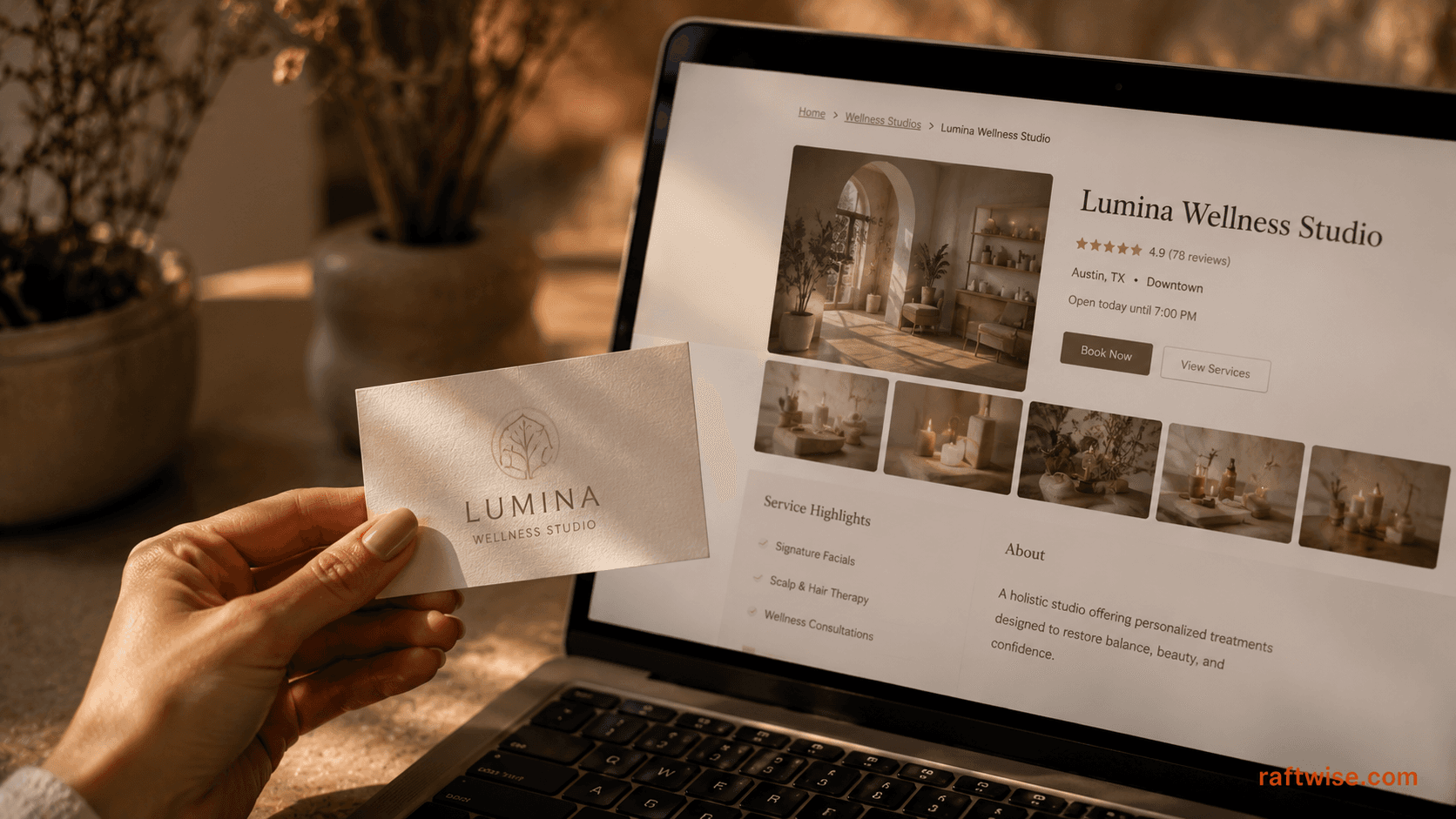
There is a good chance your salon has a Vagaro listing you never created. Or a StyleSeat profile with your old phone number. Or a Fresha page that still shows the hours from before you changed to Tuesday closings. These platforms create listings for salons automatically — often pulling data from older sources, and often getting it wrong.
Local citations for hair salons are any online mention of your salon's NAP: Name, Address, and Phone number. Google reads these citations across dozens of directories and platforms to verify that your salon is real, located where you say it is, and consistent enough to rank. When your citations contradict each other — one listing shows "The Cut Studio," another shows "Cut Studio LLC," and a third shows an old suite number — Google reads uncertainty where it wants confidence.
The result is a quiet drag on your map pack rankings. Not a sudden drop, just a ceiling you can't break through.
Key Takeaways
- Booking platforms like Vagaro, StyleSeat, Fresha, and Booksy auto-create salon listings — often with outdated NAP data that conflicts with your Google Business Profile.
- Google uses citation consistency across 50+ sources as a trust signal; even a suite number formatting difference ("Suite 2" vs. "#2") can split local authority.
- Fix Tier 1 listings (GBP, Yelp, Bing Places, Apple Business Connect, Facebook) before building new ones — errors here multiply downstream.
- Salons that claim and correct their top 12 citations typically surface 5–10 meaningful inconsistencies that have been suppressing rankings for months.
What Citations Are and Why They Matter for Salons
Local citations are one of Google's key local prominence signals. They function like references on a job application: the more credible sources confirm the same information, the more confident Google becomes that your salon belongs in the map pack for nearby searches.
For salons specifically, citations carry extra weight because the landscape is crowded. Clients searching "hair salon near me" in most US cities see 40–100+ results. Google has to decide in milliseconds which three go in the map pack. Citation consistency is one of the clearest signals it can read quickly — the salon with coherent, authoritative data across the web edges out the one with scattered, conflicting listings.
NAP consistency means every listing shows the same business name, address (including suite or unit number), and phone number in the same format. "Coastal Hair Studio" and "Coastal Hair Studio & Spa" are different names to Google's parser. "Suite 4" and "#4" are different addresses. These are not cosmetic differences — they are signals that Google uses to determine whether listings represent the same business.
Our observation: Salon rebrands are the single biggest citation disaster we see. A studio that changed its name two years ago often still has 20+ listings under the old name — because no one went back and updated them. The old name citations don't disappear; they actively dilute the authority of the new name.
The Three Tiers of Salon Citations
Not all citations carry equal weight. Work through the tiers in order — fixing errors at Tier 1 before you spend time on Tier 3.
Tier 1: Core Directories (Fix These First)
These are the highest-authority sources. They also feed data to dozens of downstream directories via aggregator networks. An error here multiplies.
- Google Business Profile (GBP) — The most important citation source. Every other platform's data is ultimately measured against it.
- Yelp — The second-highest-traffic review platform for salons. Clients check it independently of Google, and it feeds data into Apple Maps.
- Bing Places — Feeds Microsoft products and often surfaces in voice search results. Frequently neglected, which makes it a fast win.
- Apple Business Connect — Controls what appears on Apple Maps and Siri. A significant percentage of your clients book from an iPhone. Claim it.
- Facebook Business Page — Facebook's local search is underrated for salons. It also feeds data aggregators and acts as a trust signal for younger clients.
Every Tier 1 listing must be claimed, verified, and identical. This is where you spend the most time and accept no shortcuts.
Tier 2: Salon and Beauty-Specific Platforms
These carry stronger relevance signals for salons than generic directories because Google assesses the context of a citation, not just its existence. A listing on a platform frequented by people searching for beauty services is worth more than a listing on a generic local business aggregator.
- Vagaro — Auto-creates listings for salons. Check whether yours exists and whether the data is correct before you claim it.
- StyleSeat — Same auto-creation issue. High-traffic for salon discovery, especially in urban markets.
- Booksy — Popular for barbers and independent stylists; also common for salon suites.
- Fresha — European-origin platform growing rapidly in the US. Auto-creates listings from publicly available data.
- Mindbody — More common for spa and wellness businesses, but relevant for salons offering facial or massage services.
- Beauty-specific directories — Salonfinder, SalonToday's find-a-salon tool, beauty school alumni directories for specific techniques.
- Local wedding directories — If your salon offers bridal hair services, local wedding directories (The Knot vendor listings, WeddingWire, local wedding blogs) are high-relevance citation sources. Brides search these platforms specifically.
What we've found in practice: Most salon owners have claimed their GBP and Yelp but have never logged into Vagaro or Fresha — even when those platforms have listed the salon for years. The auto-created data is usually pulled from an aggregator snapshot, which means it might show the address you had before you moved, or the phone number from your old management software account.
Tier 3: General Business Directories
Lower individual authority, but they collectively contribute to your citation footprint and fill in coverage gaps.
- Yellow Pages / YP.com
- Foursquare / Swarm (feeds many apps and aggregators)
- Better Business Bureau
- Chamber of Commerce (local chapter)
- Superpages / Dex
Don't prioritize these until Tier 1 and Tier 2 are clean. A consistent Tier 3 listing on a low-authority directory adds a small positive signal. An inconsistent one adds a small negative signal. Get the high-authority ones right first.
How to Audit Your Salon's Citations
Step 1: Define Your Canonical NAP
Before searching for inconsistencies, decide exactly what is correct. Write this down in a document you'll keep:
- Business name: Exactly as it appears on your sign, your lease, and your website. Not a nickname, not a shortened version.
- Address: Full address including suite or unit number. Choose one format and commit: "Suite 4" or "Ste. 4" — not both. Many salons operate in suite-based concepts (Sola Salons, Salon Lofts, etc.) — your suite number is a required part of the address.
- Phone number: Your main booking line. One format: "(310) 555-1234" or "310-555-1234" — pick one and standardize everywhere.
- Website URL: Decide whether you use
wwwor not. Use the exact URL that appears in your browser, not a redirect.
Step 2: Search and Document
Search "[Your Salon Name]" "[Your City]" in Google. Work through the first 5–7 pages of results. Open every directory listing you find and record what NAP data it shows. Flag anything that differs from your canonical NAP.
Also search your phone number in quotes: "(310) 555-1234". This surfaces listings that mention your number but may have a different name or address — often a symptom of data pulled from an old aggregator snapshot.
Manually check: Yelp, Bing Places, Apple Maps, Facebook, Vagaro, StyleSeat, Booksy, and Fresha by searching for your salon name directly on each platform.
Step 3: Claim and Verify
Every listing you find that isn't claimed is a liability — anyone can suggest edits, and aggregators can overwrite it with outdated data. Claim every listing, even if the information currently looks correct.
Claiming a listing requires verifying ownership, usually by phone, postcard, or email. This step takes time but is non-negotiable. An unclaimed Yelp listing will eventually drift.
Common NAP Inconsistencies for Salons
These are the issues that surface most often when auditing salon citations:
Booking platform auto-listings with stale data. Vagaro, StyleSeat, and Fresha pulled your salon's information from a data aggregator when they first launched your listing. That aggregator data may be 2–3 years old. If you've moved, changed your number, or changed your hours since then, those listings are silently wrong.
Rebrand drift. If your salon changed its name — even a subtle change like dropping "& Spa" from the name — the old name persists across every directory that was never updated. Google can eventually reconcile these, but it slows the process and splits authority between name variants.
Duplicate Yelp listings. A common outcome of a location move or management change. Two listings for the same salon accumulate reviews on different pages, splitting social proof and confusing Google about which listing is canonical. Yelp has a duplicate reporting process — use it.
Facebook page vs. Facebook Business Page conflicts. Some salons have both a personal Facebook page that was used informally as a business page and a proper Facebook Business Page. Both appear in search. The NAP data on each is often different.
Suite number formatting variations. "Unit 12," "Suite 12," "#12," and "No. 12" are all the same physical location but parsed as different addresses. Data aggregators pull suite formats differently from different sources and introduce variation without any action on your part.
The aggregator loop: Data aggregators — primarily Data Axle (formerly InfoUSA), Foursquare, and Neustar Localeze — publish your data to hundreds of downstream directories. If their database has wrong information, it gets republished everywhere on a rolling cycle. Correcting your GBP does not automatically fix aggregator data. You need to submit corrections to the aggregators directly, or the wrong data will keep reappearing.
Building New Salon Citations
Once your existing citations are clean and consistent, adding new ones increases your local authority footprint. The best targets for salons that aren't already listed:
Local wedding directories. If your salon offers bridal services, a listing on The Knot, WeddingWire, and local wedding blogs is a high-relevance citation. Brides use these platforms actively in the months before their wedding. A citation here signals to Google that your salon is an established bridal vendor in your market.
City and neighborhood guides. Most cities have local media outlets, neighborhood apps (Nextdoor business pages), and city guide websites that maintain business directories. A listing on a local news site's business directory carries meaningful local authority.
Beauty school and technique-specific directories. If your stylists specialize in specific techniques — Keratin, DevaCurl, Balayage — check whether those brands or training programs maintain salon directories. Listing in a "DevaCurl approved salon" directory is both a citation and a trust signal for a specific client segment.
Local Chamber of Commerce. The Chamber of Commerce listing alone won't move rankings significantly, but it contributes to your citation footprint and is typically easy to claim.
When you add any new citation, fill it out completely — hours, services, description, photos — not just the NAP. A complete listing passes more authority signals than a bare-bones one.
Maintaining NAP Consistency Over Time
Citations require ongoing attention because the web is not static:
- Data aggregators refresh from old sources on a rolling cycle and can overwrite correct information with outdated data.
- Booking platforms periodically re-pull aggregator data, especially after platform updates.
- Anyone can suggest edits on some platforms (Yelp, Google) — edits don't always require your approval.
Set a quarterly calendar reminder to spot-check your top 10 listings. Specifically: your GBP, Yelp, Bing Places, Apple Maps, Facebook, Vagaro, and StyleSeat. These are the highest-traffic and highest-authority sources — if something has gone wrong, you want to catch it within 90 days.
When you move your salon: Update GBP first, then Yelp, Bing Places, Apple Business Connect, and Facebook within the same week. Submit address corrections to the main data aggregators (Data Axle, Neustar Localeze, Foursquare). Expect 60–90 days for the full update to propagate through the citation network. Do not create new listings at the new address without first updating old listings — you will generate duplicates.
When you change your phone number: Same process. Update GBP and Tier 1 platforms immediately. The most urgent fix is GBP, because clients who call the wrong number from your Google listing don't call back.
When you rebrand: Define the new canonical name and update every listing. Prioritize Tier 1 first, then Tier 2 booking platforms, then Tier 3 general directories. Do a full audit search for the old name 90 days after you start the update — stragglers will surface.
Citation work is slow and unglamorous. It doesn't generate the instant feedback of a new Instagram post or a Google Ads campaign. But it removes a persistent drag on your map pack visibility that compounds over time. A salon that audits and cleans its citations typically surfaces 5–10 meaningful errors that have been quietly working against it for months. Fixing them doesn't feel like a win — until your rankings start to move.
For the full local SEO system, including your GBP setup and on-page website optimization, see the guides linked below.
Related Raftwise Guides
- The Complete Local SEO Guide for Independent Hair Salons
- Salon Google Business Profile Optimization: Why You Are Losing to Chains
- Hair Salon SEO: The Complete Local Marketing Guide for 2026
Sources and Further Reading
Written by Riya Gupta. Reviewed by the Raftwise Editorial Team for accuracy, clarity, and relevance to independent salons.
Frequently Asked Questions
More on Local SEO

Want to know where your next bookings are leaking?
We'll review the search and conversion gaps tied to this topic, then show you the highest-priority fixes for your salon.