Medspa Marketing: How to Grow Your Medical Spa in 2026
The medical spa market hits $23.4B in 2026 — but 90% of locations are independently owned and competing for the same high-intent searches. Here's how to win.
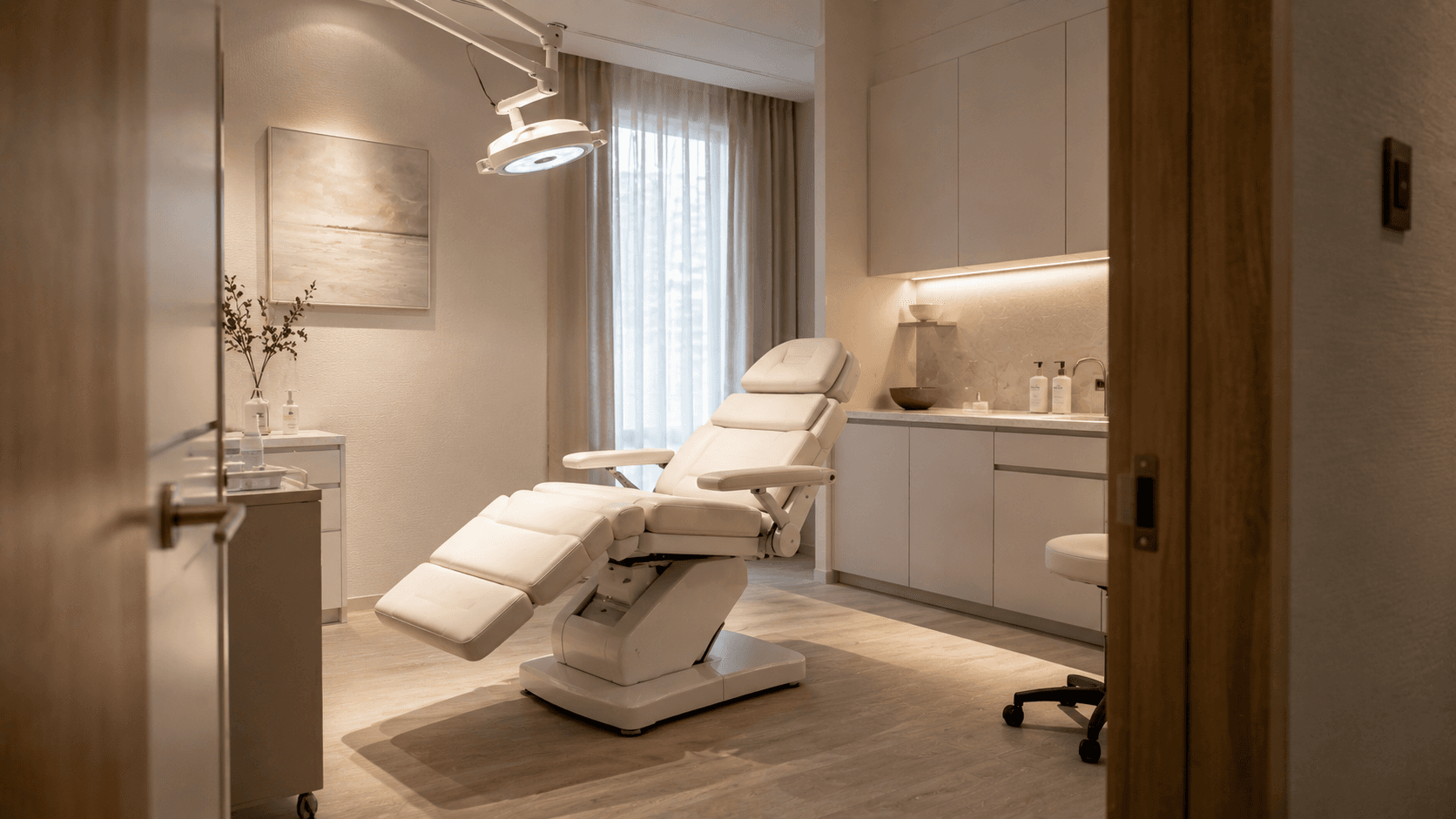
Quick Answer: Medspa marketing sits at the intersection of medical credibility and luxury experience — which is why generic spa marketing doesn't work for it. The most effective medspa marketing combines procedure-specific local SEO, Google Ads for high-intent searches, before/after content with compliance guardrails, and a reputation presence on specialist platforms like RealSelf.
The medical spa market is expected to reach $23.4 billion in 2026, growing at a 12.75% annual rate (Grand View Research, 2025). But 90% of that market is independently owned, and 81% operate as single-location businesses (American Med Spa Association, 2024). That means you're competing against thousands of small operators who all want the same map pack positions for "Botox near me" and "HydraFacial [your city]."
The medspas that win those positions aren't outspending their competitors. They're out-thinking them. This guide covers every component of a medspa marketing system that actually builds a book of business: local SEO, paid search, content strategy, reputation management, and the compliance minefield that can make or break your online presence.
Key Takeaways
- The U.S. medical spa industry grew from 8,899 to 10,488 locations in a single year (2022-2023), intensifying competition for local search positions (American Med Spa Association, 2024).
- 94% of aesthetic clients consult online reviews before booking a procedure; a one-star improvement in rating correlates with 5-9% revenue growth (NKP Medical, 2024).
- Short-form video (Instagram Reels, TikTok) generates 2-3x higher engagement than static posts in beauty categories (Hootsuite Social Media Trends Report, 2025).
- RealSelf reaches over 10 million monthly visitors and remains the dominant specialist review platform for aesthetic procedures.
- Well-optimized Google Ads campaigns for aesthetic procedures regularly achieve 5-10% conversion rates against a health industry average of 3.36% (Pennock, 2024).
Why Medspa Marketing Is Different From Day Spa Marketing
Medspa marketing requires a fundamentally different approach because the purchase decision is fundamentally different. At a day spa, clients book a massage for relaxation. At a medical spa, they're making a medical decision — choosing a provider to inject their face or treat their skin with a Class II medical device. That distinction changes everything about how you market.
Trust signals that work for day spas (beautiful photos, calming language, good Yelp reviews) are necessary but not sufficient for medspas. Your potential clients also want to know: Who is the injector? What are their credentials? Are they an NP, PA, or MD? How many procedures have they performed? Google's E-E-A-T framework (Experience, Expertise, Authoritativeness, Trust) was built for exactly this kind of high-stakes content evaluation, and medspa websites that don't surface provider credentials prominently get suppressed in organic rankings.
The luxury-meets-medicine positioning creates a specific content challenge. Your messaging has to do two things simultaneously: communicate the warmth and results of an aesthetic experience while establishing enough clinical authority that clients feel safe handing you a syringe. Most medspa websites fail at one or the other. They're either all atmosphere with no provider bios, or they're clinical to the point of sterility with no sense of the experience clients are paying for.
Our finding: Independent medspas that feature individual provider headshots, credential listings, and treatment-specific before/after photo galleries see materially higher time-on-page metrics than those using stock photography and generic "our team" pages. Clients are researching specific people, not just businesses.
See our guide to spa website design and conversion for the UX principles that convert visitors into booked appointments.
The Medspa Local SEO Foundation
Local SEO for medspas is the highest-ROI marketing channel available to most independent practices. It's also where most medspas leave significant revenue on the table. Your Google Business Profile (GBP) is the first thing that appears when someone searches "Botox near me" or "HydraFacial [city]" — and getting into the map pack for those searches costs nothing in ad spend.
Set your GBP primary category to Medical Spa — not "Day Spa," not "Skin Care Clinic," not "Beauty Salon." Secondary categories to add based on your actual services: Skin Care Clinic, Day Spa, Medical Clinic. Each secondary category expands your footprint for adjacent searches without diluting your primary signal.
The Services section of your GBP is indexed for relevance and is systematically underused. List each treatment by its common name: Botox, Dysport, Juvederm, Restylane, HydraFacial, Microneedling, Morpheus8, laser hair removal, CoolSculpting, body contouring, IV therapy. Include a 150-200 word description for each service that uses the treatment name, the area treated, and what to expect — Google surfaces this content in response to specific procedure queries.
Our finding: Medspas that list 15+ named services in their GBP Services section consistently rank for more long-tail procedure searches than competitors with 3-5 generic entries. The category "injectables" does not rank. "Botox for crow's feet" does.
For a full breakdown of local profile optimization, see our spa Google Business Profile guide.
Procedure-Specific Pages: The SEO Asset Most Medspas Are Missing
Every procedure you offer deserves its own dedicated page. Not a section on your services page — a full standalone URL. The search volume for specific treatment queries dwarfs the search volume for "medspa near me." People search for exactly what they want.
Here's how to structure each procedure page for maximum search visibility and conversion:
The page URL should follow the pattern /botox-[city] or /hydrafacial-[city]. Your H1 should match the search query: "Botox in [City]: What to Expect, Pricing, and How to Book." The first 150 words should answer the most common question about that treatment. Then: a provider bio with credentials, a before/after photo gallery with proper disclosures, FAQs targeting long-tail queries, pricing transparency (or a clear "pricing starts at" range), and a direct booking CTA.
The treatments that justify their own dedicated pages for most medspas:
Injectables: Botox (neurotoxin), Dysport, Xeomin, Juvederm, Restylane, Sculptra. Botox alone drove $6.73 billion in global sales in 2024 (Skinworks Medical Spa, 2024). Google searches for male Botox increased 3,300% between January and September 2024 alone — a segment virtually no independent medspa is targeting.
Facial treatments: HydraFacial, microneedling, chemical peels, dermaplaning. Facial treatment is the largest medspa service category, with a 53.81% market revenue share in 2024 (Grand View Research, 2025).
Body treatments: Laser hair removal, CoolSculpting, body contouring, Morpheus8.
Wellness: IV therapy, vitamin injections. These draw a different search intent — weight-loss adjacent, performance-focused — and deserve separate keyword targeting.
Each page is a permanent, compounding asset. A well-optimized Botox page can rank for dozens of long-tail procedure queries for years without ongoing ad spend.
Google Ads for High-Intent Medspa Searches
Paid search produces results within days, not months. For medspas, it's the fastest path to filling the schedule during slow periods or launching a new treatment. The health and medical industry averages a 3.36% conversion rate on Google Search, but well-optimized aesthetic campaigns regularly achieve 5-10% (Pennock, 2024). That's a meaningful gap — and it comes from landing page quality, not budget size.
What makes a medspa Google Ads campaign perform:
Run Search campaigns, not Display. Your clients are actively searching — you don't need to interrupt them on other websites. Target procedure-specific keywords: "Botox near me," "HydraFacial [city]," "microneedling [city]," "laser hair removal [city]." Avoid broad match terms like "medspa" or "aesthetics" — they burn budget on research-phase queries that don't convert.
Your landing page must match the ad exactly. If the ad says "HydraFacial — Book Online Today," the landing page should be your HydraFacial service page, not your homepage. Landing page relevance is both a Quality Score factor and the primary driver of conversion rate.
Budget: the average practice spends $6,000-$16,000/month on paid advertising alone (LIFT Aesthetic Marketing, 2024). That's a wide range. Start with $2,000-$3,000/month on two or three of your highest-margin treatments. Scale what converts.
One thing most medspa Google Ads guides skip: negative keywords. Add "DIY," "at home," "kit," "school," "training," and "certification" as negatives immediately. These queries account for a surprising share of wasted spend in the aesthetics category.
Instagram Reels, Before/After Content, and the Visual Trust Stack
What drives a prospective client from "curious" to "booked"? In the aesthetics industry, it's almost always a before/after photo or a treatment education video. These are not vanity metrics — they're the primary trust signals in your category.
Short-form video generates 2-3x higher engagement than static posts in beauty categories, according to Hootsuite's 2025 Social Media Trends Report. Reels that work for medspas: the "60-second treatment walkthrough" (what happens during a HydraFacial, step by step), the provider perspective ("three questions I ask every new Botox client before we start"), and the myth-busting format ("Botox doesn't freeze your face — here's what it actually does"). These formats educate while establishing the provider's credibility.
Static before/after content on Instagram and your website remains the most direct conversion driver. Clients booking cosmetic procedures want to see results on real people — not stock photos, not illustrations. A library of genuine before/afters is a competitive advantage that no ad spend can replicate.
What does that visual trust stack look like in practice? On each procedure landing page: provider headshot and credentials at the top, five to eight before/after photos midway through the page (after you've built context for the treatment), and a Google review widget near the booking CTA. In that order. The credentials establish why they should trust you; the photos show the results; the reviews confirm other clients made the same decision and are happy.
RealSelf and Platform-Specific Reputation Strategy
83% of medspa clients consider themselves regulars who return monthly (Brenton Way, 2025). Retaining those clients is largely a function of the experience you deliver. Acquiring new ones, however, depends on what strangers find when they research you online.
94% of aesthetic clients consult online reviews before booking. They're looking at Google first, then RealSelf. With over 10 million monthly visitors, RealSelf is the dominant specialist platform for cosmetic procedure research — the place where high-intent clients compare providers before making their first call. A medspa without an active RealSelf presence is invisible to a meaningful segment of its addressable market.
What makes RealSelf work: complete your profile with every procedure you offer (they'll rank you for procedure searches within their platform), upload before/after photos to each treatment category, and respond to every review within 24 hours. RealSelf's algorithm surfaces providers who engage with the platform. Providers who ignore it sink.
For Google reviews, your goal is volume and recency. A practice with 120 reviews averaging 4.7 stars consistently outranks one with 40 reviews averaging 5.0 stars in local search. Ask for a review at the post-appointment stage, when satisfaction is highest. Automated SMS review requests sent within two hours of a visit reliably outperform any other review acquisition method.
Check out our spa online reputation management guide for the full review acquisition playbook.
The Compliance Minefield: What You Can and Can't Say
This is where medspa marketing gets genuinely dangerous if you're not careful. The FTC, FDA, and state medical boards all have authority over medspa advertising — and violations can result in fines, forced consent decrees, or in extreme cases, license risk for the supervising physician.
The rules that trip up medspa marketing most frequently:
Before/after photos require HIPAA-compliant written authorization specifying the exact images to be used, the exact platforms where they'll appear, the duration the authorization is valid, and the client's explicit right to revoke. A blanket "you can use my photos" form is not sufficient. Using before/after photos without compliant authorization is the number-one violation in medspa advertising, according to compliance specialists (Medical SPA RX, 2024).
Outcome claims must be representative of typical results, not exceptional ones. You can say "reduce the appearance of wrinkles." You cannot say "eliminate wrinkles" or "get rid of crow's feet permanently" — the word "permanently" implies a medical durability claim. "Melt fat" is a prohibited claim for body contouring devices not cleared for fat removal.
Influencer disclosures are FTC-required any time there's a material relationship. Free services in exchange for a post = disclosure required. This applies to micro-influencers and even employees posting about the practice.
Provider credentials must be accurate and not imply a higher scope of practice than the provider holds. An NP performing Botox under physician oversight cannot be marketed as "doctor-administered" unless an MD is actually administering the treatment.
The compliance audit every medspa should run quarterly: Google your own business name and scan every public-facing page, social post, and review response for these failure modes. The cost of a compliance attorney review is a fraction of the cost of a regulatory complaint.
AI Search and the Future of Medspa Visibility
Something is changing in how aesthetic clients find providers. A growing share of initial research is now happening in AI search tools — ChatGPT, Perplexity, Google's AI Overviews. These tools pull from structured, credible web content to answer queries like "best Botox providers near me" or "what should I look for in a HydraFacial provider."
Medspas that want to appear in these AI-generated answers need to think about their content differently. AI systems favor content that is specific, citable, and structured. That means: procedure pages with clear definitions and clinical descriptions, provider bios with verifiable credentials, FAQ content that directly answers common pre-booking questions, and schema markup that tells Google's crawlers exactly what type of business and what treatments you offer.
This is exactly the intersection where traditional local SEO and AI search optimization converge. The medspa that ranks in the map pack for "HydraFacial near me" and also appears in an AI Overview answering "what's included in a HydraFacial" occupies two different moments in the same purchase journey.
Citation capsule: According to the American Med Spa Association's 2024 State of the Industry Report, the average annual revenue per medspa reached $1,398,833 in 2024 — up from $1,307,587 in 2022 — with over 80% of operators expecting further revenue growth in 2025. Independent medspas that build a consistent search presence across Google, RealSelf, and AI platforms are positioned to capture a disproportionate share of that growth (AmSpa, 2024).
For a deeper look at how AI platforms surface local service businesses, read our guide to attracting new spa clients.
Building the Full Medspa Marketing System
None of these channels works in isolation. The medspas consistently filling their schedules aren't the ones spending the most on ads — they're the ones who've built all the pieces and let them compound.
The order matters. Start with the foundation: GBP optimization, procedure-specific pages, and a HIPAA-compliant before/after photo system. Without these, ad spend leaks through a sieve — you can drive clicks, but you'll convert poorly because there's no trust infrastructure on the landing page.
Then add the amplification layer: Google Ads for high-intent procedure searches, Instagram Reels for treatment education, and a systematic review acquisition process. At this stage, the foundation converts paid traffic efficiently and organic traffic compounds in the background.
Finally, the retention and compounding layer: email marketing to existing clients for re-booking and new treatment introductions, referral incentive programs, and loyalty structures for high-frequency clients. Clients who started with a HydraFacial and now do quarterly Botox and monthly memberships are the economics that make independent medspas genuinely profitable.
What does this cost? The industry average is 7% of revenue on marketing (AmSpa, 2024). For a medspa at the $1.4M average revenue, that's roughly $8,200/month. Raftwise's all-inclusive plan — website, local SEO, AEO, and GEO — runs $299/month billed yearly ($3,588/year). It's not a replacement for ad spend, but it's the infrastructure layer that makes every other marketing dollar work harder.
Raftwise offers a free visibility analysis for independent medspas. We'll show you exactly where you rank today for your highest-value procedure searches, what your GBP is missing, and what it would take to move into the map pack for the searches your best clients are running right now. Get your free visibility analysis — no sales call required.
Frequently Asked Questions
How much should a medspa spend on marketing?
The American Med Spa Association's 2024 State of the Industry report puts the average at 7% of revenue. For a medspa generating $1.4M annually (the 2024 industry average), that's roughly $98,000/year or $8,200/month. Marketing-forward practices allocate 10-15% of revenue to fuel faster growth.
What's the best social media platform for medspa marketing?
Instagram remains the primary channel for aesthetic businesses because it's built for visual content. Short-form Reels deliver 2-3x higher engagement than static posts in beauty categories (Hootsuite, 2025). TikTok is a strong secondary channel for treatment education content targeting clients under 35.
Can a medspa use before and after photos in advertising?
Yes, but with strict requirements. The FTC requires results shown to be real and representative. HIPAA requires a written authorization specifying the exact images, platforms, publication duration, and the client's right to revoke. A blanket photo release is not sufficient. Using before/after photos without proper authorization is the number-one compliance violation in medspa advertising.
What words and claims are prohibited in medspa marketing?
You cannot guarantee specific outcomes ("lose 3 inches"), make FDA-prohibited claims about unapproved uses of approved devices, or claim your results are "typical" unless supported by clinical evidence. Phrases like "eliminate," "cure," or "permanently remove" for most aesthetic treatments cross into medical claims territory and invite regulatory scrutiny.
How long does medspa SEO take to produce results?
Google Business Profile and local SEO optimizations for a medspa typically show measurable ranking improvements within 60-90 days. Organic content rankings for competitive procedure keywords (Botox, fillers) take 4-6 months for a new site and 2-3 months if you're refreshing an established domain. Google Ads produce results in days, not months.
Written by Riya Gupta. Reviewed by the Raftwise Editorial Team for accuracy, clarity, and relevance to independent spas.
Frequently Asked Questions
Want to know where your next bookings are leaking?
We'll review the search and conversion gaps tied to this topic, then show you the highest-priority fixes for your spa.