How to Attract New Spa Clients From Local Search: What Actually Works
First-time visitor specials, gift card SEO, and a homepage built for cold search traffic — the acquisition strategies that work for spas are simpler than you think, and most spas are not using them.
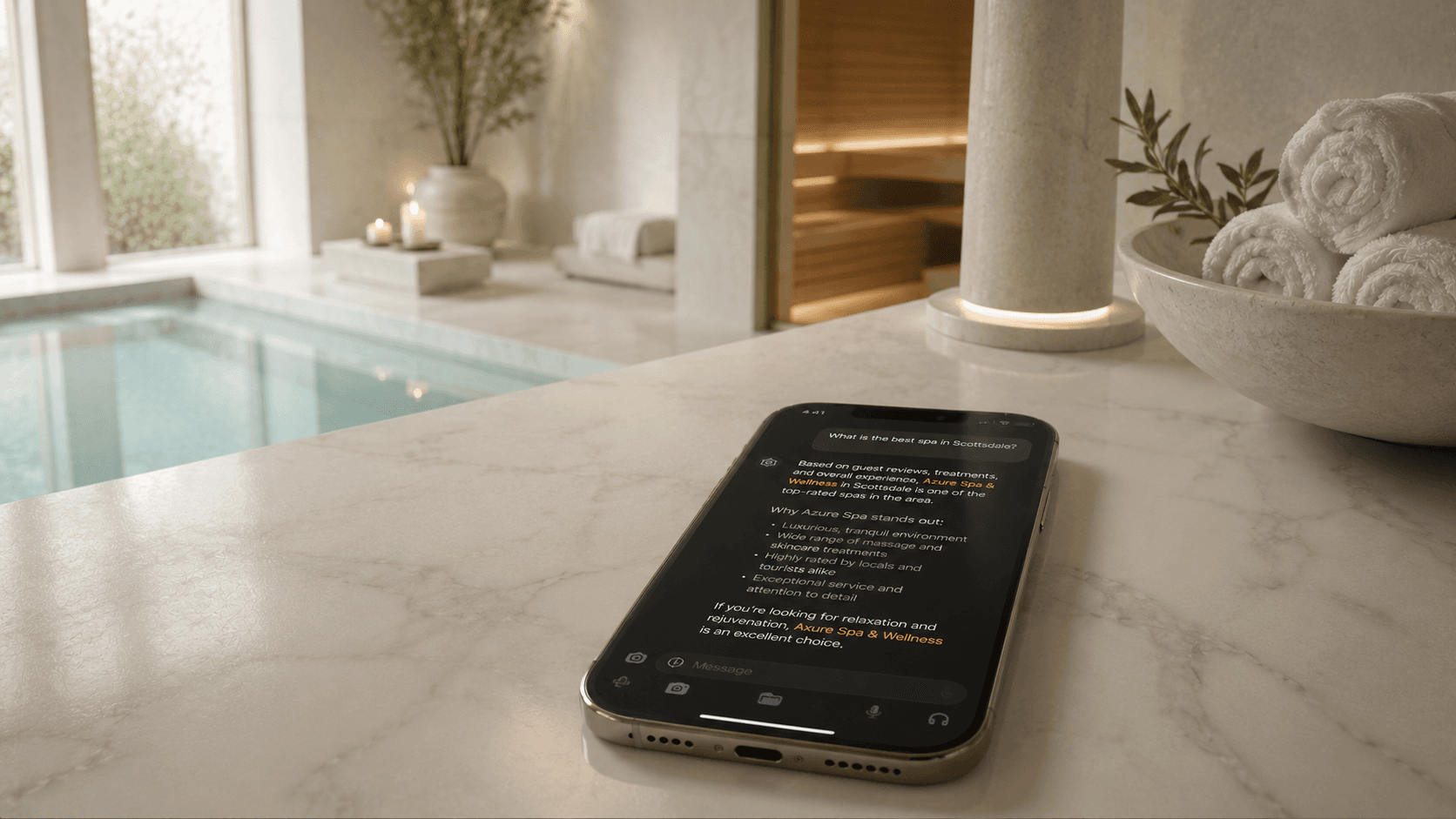
New spa clients predominantly find you through Google — either through a local search ("day spa near me," "massage near me") or through a more specific service search ("couples massage [city]," "HydraFacial [city]"). The question is not whether local search sends you new clients; the question is whether your website and GBP presence convert them when they arrive.
Most spas lose new search visitors at predictable failure points. This guide explains how to stop losing them.
The First-Time Visitor Special: Building It Right
A new client special for a spa serves a specific psychological function: it reduces the perceived risk of trying an unfamiliar service from an unfamiliar provider. The rational calculation for a potential client evaluating your spa is: "Is this worth the time, the money, and the vulnerability of a first visit?" A first-visit offer changes the risk calculus.
For it to work, three things need to be true:
The offer must be specific. "New client special" is not an offer — it is a category. "60-minute Swedish Massage for $75 (regularly $95) — new clients only" is an offer. Specificity is what converts.
The offer must be visible without effort. If a new client from Google has to navigate to a "Promotions" or "Specials" page to find the offer, most will not find it. The new client special belongs above the fold on your homepage — in the hero section or immediately below it.
The offer must explain the first visit. New spa clients, especially those who are first-time massage or facial recipients, have anxiety about what to expect. An offer that includes a brief description of the first-visit experience ("Your visit includes a brief intake consultation, your service, and time in our relaxation lounge") reduces that anxiety and increases conversion.
Gift Card SEO: The Opportunity Most Spas Ignore
Spas are among the most gifted personal services businesses in the economy. Gift cards account for a significant percentage of spa revenue, and the searches that drive gift card sales are specific, predictable, and largely uncontested.
Common spa gift card search queries:
- "spa gift card [city]"
- "massage gift [city]"
- "spa gift certificate near me"
- "day spa gift [city]"
- "Mother's Day spa gift [city]"
Most spa websites have a gift card purchase option buried in a navigation menu or accessible only through the booking page. Most have no dedicated webpage for gift cards that would rank in search.
Build a dedicated gift card page at a clear URL (yoursite.com/gift-cards) with:
- H1: "Spa Gift Cards in [City] — The Gift They Actually Want"
- A brief intro paragraph explaining your gift cards (digital delivery, no expiration, valid for all services)
- Service suggestions at different price points ("$75: 60-minute relaxation massage," "$150: Couples massage," "$200: Full-day spa package")
- A purchase widget or booking link
- SEO targeting the phrases above in the page title, meta description, and H1
Publish this page and then promote it via GBP Posts 3–4 weeks before each major gifting holiday. The searches come to you — you just need a page optimized to catch them.
Homepage Structure for Cold Search Traffic
When someone arrives at your spa website from a Google search, they are a stranger. They found you in search, probably saw your reviews and a few photos on Google Maps, and clicked through to learn more before deciding whether to book.
Your homepage has approximately 8 seconds to answer the visitor's implicit questions:
- Is this spa in my area?
- Does it offer the service I'm looking for?
- Does it look like a place I would feel comfortable?
- Can I trust it?
- How do I book?
Most spa websites fail at questions 1, 2, and 5. Their homepage headline is something like "Relax. Restore. Renew." — which says nothing about location or services. The booking path requires multiple clicks to find.
The homepage structure that converts cold search traffic:
Hero section: Clear spa name with city, a sensory-focused headline (not a vague tagline), your 2–4 featured services visible or linked, a prominent "Book Now" button, and 4+ stars with review count displayed.
Social proof row: A star rating badge, review count, and 2–3 very short client quotes — immediately below the hero.
Services overview: The 4–6 treatments you want to feature, with names, brief descriptions, and a "Book This" link for each.
New client offer: Your first-visit special, prominently placed, with a dedicated booking CTA for new clients.
Ambiance section: 3–4 atmosphere photos that sell the experience visually before the client ever arrives.
Team section: Therapist names and brief credentials — who will be taking care of them?
FAQ section: The 5–6 questions new clients always ask (What should I wear? Do you require appointments? What is your cancellation policy?). FAQ content also has SEO value.
This structure serves the new visitor from Google — it answers their questions in the order they naturally arise and provides a booking path at multiple points.
Return Clients: Serving Them Without Sacrificing New Client Conversion
Return clients need a faster path than new clients. They know your spa, they know what they want, and they just need to book quickly.
Do not redesign your homepage for return clients at the expense of new client conversion. Instead:
- Put your booking link in the main navigation header where it is visible and clickable from any page
- Create a "Loyalty" or "Membership" page in the navigation for return clients who want package or membership information
- Use email marketing (post-visit automated emails) as the primary communication channel for return clients — not your homepage
Your homepage is your primary new client conversion asset. Keep it oriented toward acquisition. Serve your existing clients with clear navigation to booking and a good email communication system.
The Seasonal Demand Calendar
Spa demand is highly seasonal and occasion-driven. Building your acquisition strategy around this calendar amplifies every other effort:
February (Valentine's Day): Couples massage packages. Create a dedicated landing page ("Couples Massage [City] Valentine's Day") and promote via GBP Posts starting February 1.
May (Mother's Day): The largest spa acquisition month of the year. Gift card promotions, mother-daughter packages, "treat Mom" messaging. Start promotion in mid-April.
December (Holiday season): Gift card purchases peak. The holiday season accounts for a significant percentage of annual gift card revenue for most spas.
January: "New Year, New You" messaging resonates. Membership and package promotions for clients making wellness resolutions.
Align your GBP Posts, website homepage messaging, and email campaigns with this calendar. Each seasonal push brings a wave of new clients who, if their experience is excellent, become return clients for the rest of the year.
New spa clients from local search require a complete, specific, and low-friction acquisition path: the right GBP presence to appear in their search, a homepage that immediately answers their questions, a clear first-visit offer to reduce trial risk, and a direct path to booking. Build this system and it works continuously — attracting new clients through every peak in the seasonal demand calendar and converting them into return visits through the quality of the experience itself.
Related Raftwise guides
- Spa Website Design for Conversions: Balancing Beauty With Performance
- Spa Google Business Profile Optimization: Stop Leaving Bookings on the Table
Sources and further reading
Written by Riya Gupta. Reviewed by the Raftwise Editorial Team for accuracy, clarity, and relevance to independent spas.
Frequently Asked Questions
Want to know where your next bookings are leaking?
We'll review the search and conversion gaps tied to this topic, then show you the highest-priority fixes for your spa.