The Complete Local SEO Guide for Chiropractic Practices
Ranking for "chiropractor near me" is decided at the Google Business Profile level — before your website even enters the picture. This guide shows how to win it.
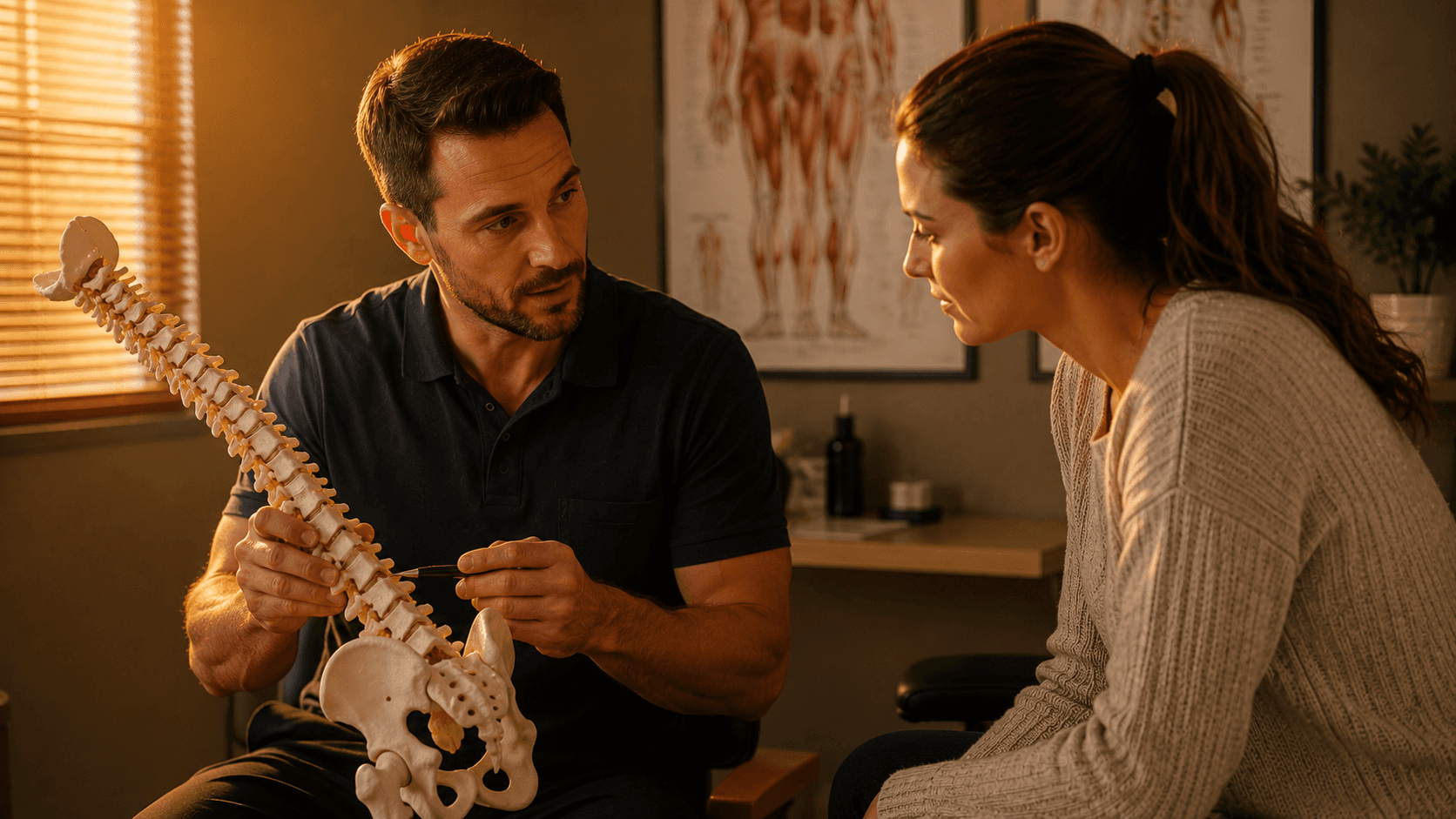
When a potential patient types "chiropractor near me" into Google, the local results can shape which practices they consider first. The Google Business Profile and website both help the patient evaluate relevance, trust, and the next step.
This guide covers exactly what moves the needle for chiropractic practices in local search — from GBP setup to citation strategy to the signals that separate practices ranking at position one from those stuck at position seven.
Use this guide for the overall local SEO system: profile, website, reviews, citations, and measurement. If you only need the profile checklist, use the chiropractic Google Business Profile guide.
Why "Chiropractor Near Me" Is Won at the GBP Level
Google's local algorithm for healthcare searches weights three signals heavily: relevance (does your profile match what the patient is searching for?), distance (how close is your practice to the searcher?), and prominence (does Google have enough evidence to trust your listing?).
You cannot change distance. You can dramatically improve relevance and prominence — and both are controlled primarily through your Google Business Profile, not your website.
Common problems include an incomplete profile, inaccurate categories, weak service information, stale photos, inconsistent business data, and no reliable review-response process. Some fixes are quick; others require sustained operational work.
Getting Your GBP Categories Right
The primary category should describe the business as specifically and accurately as possible. For most chiropractic practices, that category is Chiropractor. Avoid broad or inaccurate categories such as "Alternative medicine practitioner" or "Wellness center" unless they genuinely describe the business.
Secondary categories allow you to capture adjacent searches without diluting your primary signal. Appropriate secondary categories for most chiropractic practices include:
- Sports medicine clinic — if you treat athletes or sports injuries
- Physical therapist — if you have a licensed PT on staff or offer PT-adjacent services
- Massage therapist — if massage therapy is an offered service
- Pain management physician — for practices that lead with chronic pain treatment
Add only categories that reflect services you actually provide. Google monitors secondary category relevance against your reviews and website content — mismatches are a known suppressor.
NAP Consistency: The Foundation Nobody Fixes
NAP stands for Name, Address, Phone number — the three data points Google uses to confirm your business is real and trustworthy. Inconsistent NAP across the web is one of the most common and most damaging local SEO problems for chiropractic practices, and it is almost always invisible until you go looking for it.
Run your practice through a citation audit tool (BrightLocal or Whitespark both offer this). Common NAP discrepancies that hurt rankings:
- Suite number present on some listings, absent on others (e.g., "123 Main St" vs. "123 Main St, Suite 4")
- Practice name with "Dr." on some listings, without on others
- Old phone number still live on an unclaimed Yelp or Healthgrades listing
- Wrong address from a previous location that was never corrected
Fix discrepancies on the priority platforms and claim listings that patients are likely to encounter. Compare visibility and profile actions with the pre-change baseline instead of promising a ranking deadline.
The Chiropractic Citation Tier List
Not all citations are equal. Build them in this order:
Tier 1 — Non-negotiable: Google Business Profile, Yelp, Facebook, Bing Places, Apple Maps. These are the high-traffic directories Google actively references.
Tier 2 — Healthcare-specific: Healthgrades, Zocdoc, WebMD Find a Doctor, Vitals, RateMDs, US News Health, ChiroOrg. These carry healthcare-specific trust signals that matter for medical search queries.
Tier 3 — Local authority: Your city's Chamber of Commerce, local hospital or health system directories, neighborhood business associations, local newspapers with business listings. These provide geographic co-citation signals that Tier 1 and 2 sources cannot replicate.
When building new citations, always use the exact same NAP format across every submission. Copy-paste from a single source-of-truth document to eliminate variation.
Services and Q&A: The Content Most Practices Skip
The Services section of your GBP is indexed by Google and shown to searchers. Most chiropractic profiles either leave it empty or populate it with vague entries like "Chiropractic Care." This is a significant missed opportunity.
Populate your Services section with the specific conditions and treatments patients actually search for:
- Spinal adjustment / spinal manipulation
- Sciatica treatment
- Auto accident injury (whiplash)
- Sports injury rehabilitation
- Lower back pain
- Neck pain and stiffness
- Headache and migraine relief
- Prenatal chiropractic care
- Pediatric chiropractic
The Q&A section is similarly underused. Seed it with the questions your front desk actually hears: "Do you accept insurance?", "What should I wear to my first appointment?", "How long is a typical adjustment?", "Do you treat car accident injuries?" Answer each question with a complete, helpful response. These appear in your GBP knowledge panel and pre-answer objections before a potential patient ever calls.
Review Velocity: The Signal That Breaks Ties
When two chiropractic practices near each other have similar profiles — same categories, similar website quality, comparable citation coverage — Google breaks ties with review signals. Specifically: total review count, average rating, and review recency (velocity).
A practice collecting 8–12 new Google reviews per month consistently outranks a practice with a higher average rating but no new reviews in 90 days. Freshness matters.
Build a systematic review acquisition program. The highest-converting method for chiropractic practices: a text message sent within 4 hours of checkout, thanking the patient and providing a direct review link. Patients are most satisfied immediately after a successful adjustment — that is the moment to ask.
Respond to every review, positive and negative, within 48 hours. Response rate and response content are signals Google uses to assess how actively managed your profile is.
Local SEO for chiropractors is not complicated, but it requires consistency. The practices winning the map pack in your city are not doing anything exotic — they have complete, accurate profiles, consistent citations, a steady stream of fresh reviews, and content that matches the exact language patients use when they search. Start with your GBP, fix your citations, and build a review acquisition system. Those three actions, executed consistently, produce the majority of local ranking improvement.
Related Raftwise guides
- Chiropractic Google Business Profile Optimization: A Step-by-Step Guide
- How to Get More New Chiropractic Patients From Your Website
Sources and further reading
Written by Riya Gupta. Reviewed by the Raftwise Editorial Team for accuracy, clarity, and relevance to independent chiropractic practices.
Frequently Asked Questions
More on Local SEO



Want to know where your next bookings are leaking?
We'll review the search and conversion gaps tied to this topic, then show you the highest-priority fixes for your chiropractic practice.